Can high-temperature superconductors transform the power infrastructure of datacenters?

With the increasing need for AI and data-heavy computing, delivering efficient and reliable power has become essential.
As interest in AI and data-centric computing grows, so does the necessity for dependable and efficient power solutions. Enter high-temperature superconductors (HTS)—a revolutionary technology designed to enhance energy efficiency by minimising transmission losses. Microsoft is diving into HTS technology to discover how our datacenters can fulfill the increasing power demand and boost our sustainability efforts. Superconductors provide a ‘lossless’ advantage, making energy transmission markedly more efficient.
Superconductors allow electricity to flow without resistance. This quality means we can transmit power more effectively, ramping up capacities quickly. Microsoft is examining how this technology can reinforce electrical grids and lessen the impact of datacenters on surrounding communities. With their compact design for transmitting large quantities of power, superconductors enable us to create cleaner and more streamlined systems.
Adopting this technology could transform power distribution in the cloud while accommodating demanding workloads like AI. Achieving this requires us to reassess conventional power designs and methods of energy transfer in datacenters today. Collaborating with partners in superconducting technology and system integrators, we aim to translate this advanced science into practical solutions beneficial for both our customers and local communities.
How Superconductors Enhance Datacentre Performance and Efficiency
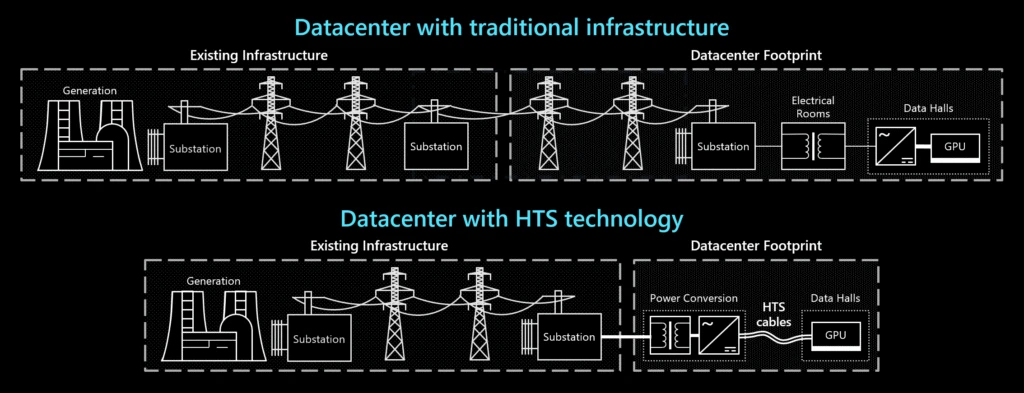
Copper and aluminium are commonly used for wiring in most cloud infrastructures, but HTS cables outperform them by transporting electricity without resistance. They are also lighter and smaller, eliminating heat generation and voltage drops as electricity flows. Central to this technology are scalable high-availability cooling systems that maintain HTS cables at the cryogenic temperatures necessary for Microsoft’s operational excellence. Unlike copper, where resistance reduces efficiency and generates heat, superconductors create a pathway for current to flow freely, eliminating losses and enabling longer distances for power travel.
Why is This Important for Datacentres?
Although HTS technology isn’t new and has been under research for decades in various fields, its economic and manufacturing viability at Microsoft’s cloud scale has only recently become apparent. Datacentres, by design, concentrate large electrical loads within compact areas. Traditional conductors often force operators into difficult choices—expanding substations, adding feeders, or limiting deployment densities. Superconductors eliminate these trade-offs: they enhance electrical density without needing more physical space, enabling facilities to meet AI-era power demands within existing or even smaller constraints.
Within the datacentres, directing more power straight to the racks enhances high-density, high-performance workloads with superior efficiency. HTS cables are lighter than copper and can deliver current across longer distances, optimising power distribution and minimising potential bottlenecks. We shared our vision for these innovative architectures at the OCP 2025 Summit.
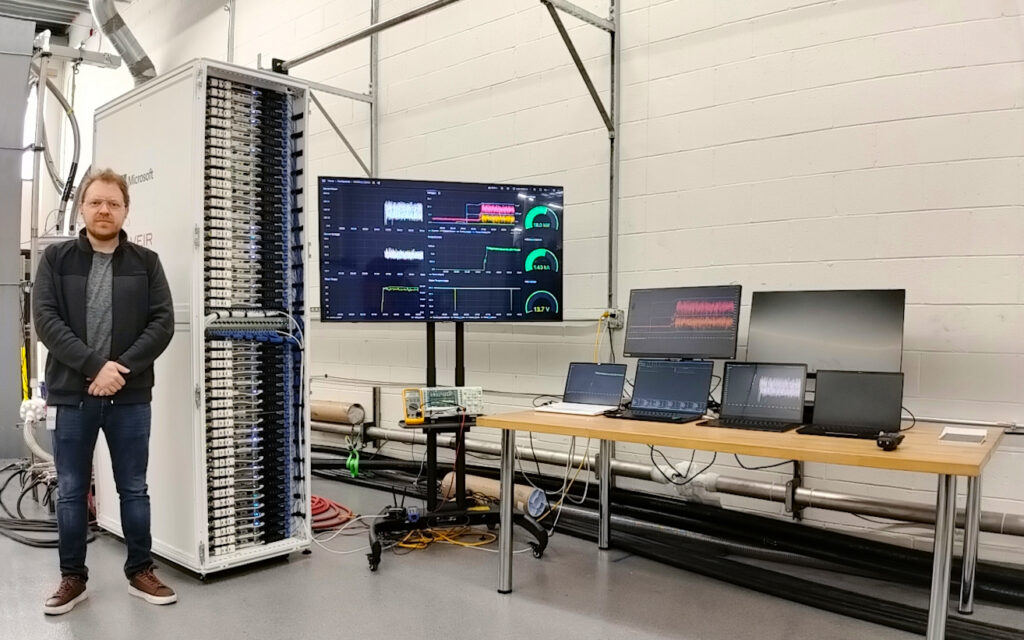
Practically, HTS has shown it can significantly reduce the size of power cables needed to deliver energy directly to server racks, paving the way for new methods of power distribution within a datacentre.
Boosting Capacity with Next-Gen Power Infrastructure
HTS technology aligns well with Microsoft’s long-term cloud ambitions. As our AI systems evolve, power remains our greatest limitation. Updating our power systems with superconductors will enable us to create electrical infrastructure that scales more readily with increasing cloud service demands. This shift could even lead to the design of innovative datacentre facilities in the future.
We need modern power systems that allow for dynamic scaling of electrical capacity without the need for entirely new infrastructure. Next-gen superconducting transmission lines can provide vastly higher capacities than traditional lines at the same voltage levels, accelerating the expansion and interconnection of datacentre sites and speeding up compute deployment to meet the surging global demand for cloud services. Superconductors represent a pivotal shift for datacentres and the electrical grid, but to fully realise their potential, we must critically reassess our traditional assumptions about power systems and rethink current strategies for power transmission and datacentre design.
Superconductors stand to redefine how power moves throughout the electricity value chain, from generation to datacentre chips. At VEIR, we develop comprehensive power delivery solutions that harness these extraordinary materials, enabling clients to overcome significant bottlenecks in energy infrastructure, unlock additional datacentre capacities swiftly, and achieve higher power and compute density.
Tim Heidel, CEO at VEIR (a Microsoft Climate Innovation Fund portfolio company)
Diminished Impact on the Grid and Local Communities
HTS systems cut down on energy loss while needing much less physical space for delivering power. From a grid standpoint, they reduce voltage drops along transmission lines and can introduce fault-current limiting features, enhancing the overall stability of the grid for high-demand facilities like datacentres, as well as for homes, schools, hospitals, and businesses nearby.
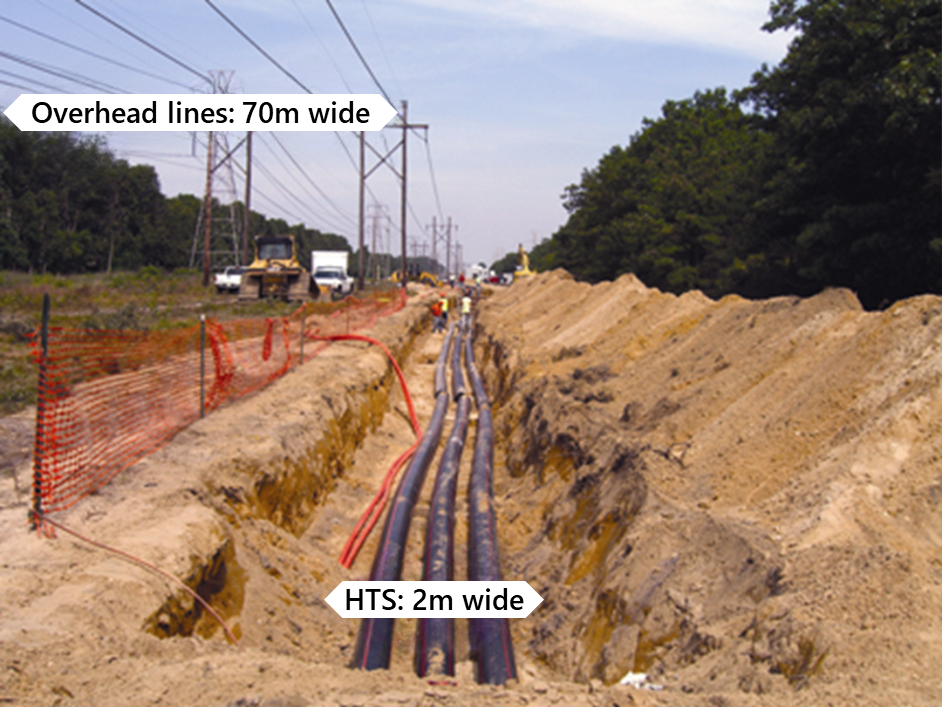
More crucially, this technology lessens the physical and social footprint of power infrastructure, benefiting local communities. Additionally, expanding electricity supply usually involves intricate efforts to boost generation capacity while improving transmission and substation systems. Unlike traditional power lines, which require wider corridors and more substantial, noticeable infrastructure (tall overhead lines and broad substations), HTS facilitates smaller, quieter, and far less intrusive systems. HTS transmission lines can carry the same power as conventional systems at lower voltages, thus reducing needed setbacks and right-of-way requirements. This results in better utilisation of space, minimising construction impacts, shortening build timelines, and easing pressure on surrounding communities.
Superconductors enabled ComEd to connect electrical grid substations in Chicago without disrupting local businesses or communities. Our unique solution enhances grid resilience.
Daniel McGahn, CEO at American Superconductor Corporation (AMSC)
We are committed to accelerating the practical applications of advanced power technologies like superconductors for quicker and more efficient deployments of realistic datacentre infrastructure systems. Alongside advancements in networking and cooling technologies, such as hollow-core fiber and microfluidics, high-temperature superconductors complete a strategic triad of power, networking, and thermal innovation in our datacentres. You might not see the power lines, but HTS technology could be working behind the scenes to ensure that power, capacity, and AI infrastructure remain efficient, resilient, and ready for the future, allowing our customers to concentrate on what matters most: building and operating their cloud workloads.
Discover the Future of Datacentres
HTS is just one of the many technologies influencing the future of datacentres. As cloud computing expands, numerous other innovations—ranging from advanced cooling systems to cleaner energy solutions—are enhancing our capacity to build faster, smarter, and more sustainable facilities. Explore more about the exciting projects driving the next generation of datacentre design.
Share this content: