Choosing the Right Cloud: GCP vs. Azure – A User’s Guide
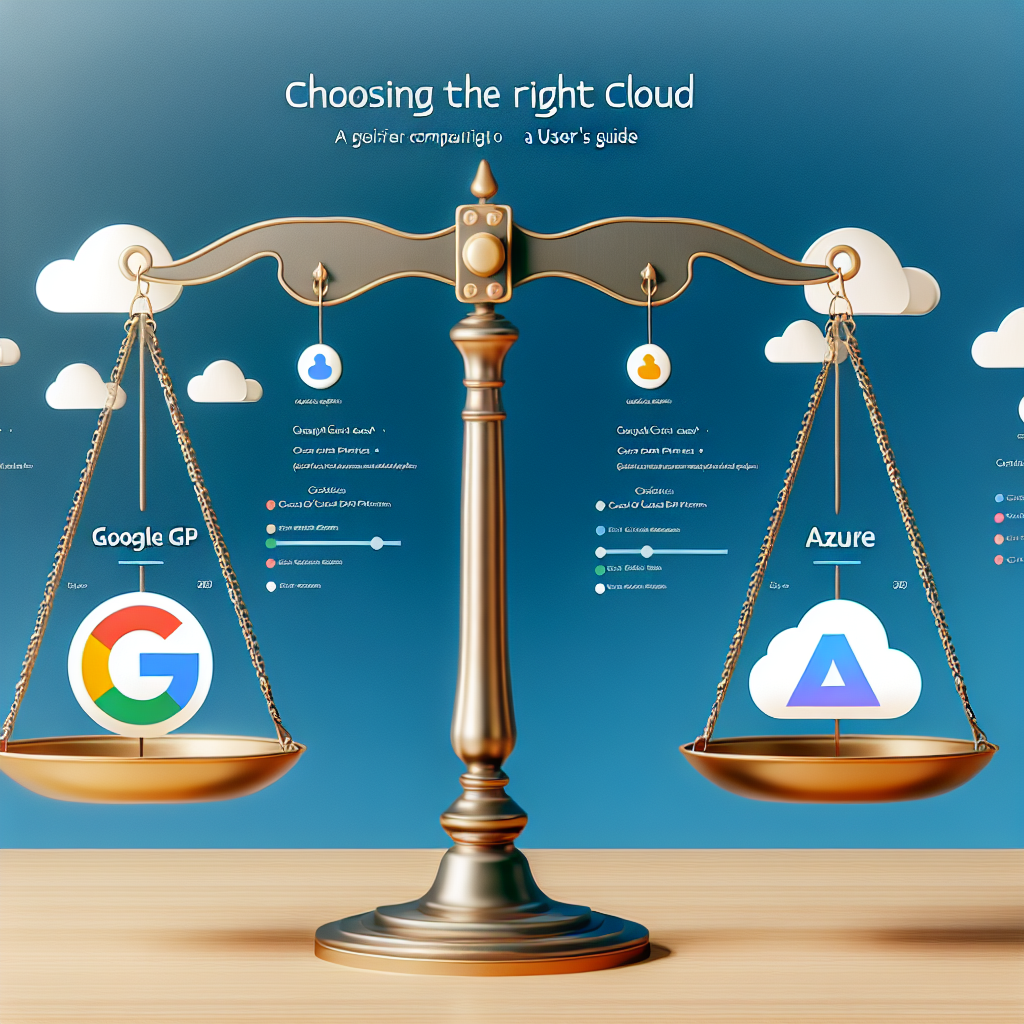
Choosing the Right Cloud: GCP vs. Azure – A User’s Guide
In an era dominated by digital transformation, selecting the right cloud service provider is crucial for businesses aiming to enhance operational efficiency and scalability. Google Cloud Platform (GCP) and Microsoft Azure are two prominent contenders that have gained traction among enterprises of all sizes. This article aims to provide a comprehensive user’s guide to help you navigate the decision-making process when choosing between GCP and Azure.
Understanding the Basics
Both GCP and Azure offer a range of cloud services, including computing power, storage, analytics, and machine learning capabilities. However, there are significant differences in their offerings, user interfaces, pricing models, and target audiences.
Google Cloud Platform (GCP)
GCP is known for its strong offerings in data analytics and machine learning. With tools such as BigQuery and TensorFlow, GCP is particularly appealing to data-driven organisations. It also boasts a network of high-speed data centres and a robust infrastructure, making it a prime choice for applications requiring low latency.
Microsoft Azure
Azure, on the other hand, has the advantage of seamless integration with Microsoft products, making it an attractive choice for businesses already invested in the Microsoft ecosystem. Its wide range of services, including Azure Active Directory and Azure DevOps, caters to various business needs, from basic web hosting to complex enterprise applications.
Key Considerations
When deciding between GCP and Azure, several factors should be taken into account:
1. Compatibility and Integration
If your organisation already utilises Microsoft products like Windows Server or Office 365, Azure may offer a smoother integration experience. GCP, while offering various integrations, may require additional configuration for a seamless experience with non-Google services.
2. Pricing Structure
Both providers have distinct pricing models that cater to different use cases. GCP tends to favour a pay-as-you-go approach, which can be advantageous for businesses with fluctuating workloads. Azure often employs a subscription-based model, which can lead to significant savings for enterprises with consistent workloads. Understanding your organisation’s workload patterns will help you effectively evaluate the cost implications.
3. Service Offerings
Each platform has unique strengths in specific areas:
- Data Analytics: GCP’s BigQuery is a standout for real-time analytics, whereas Azure provides strong data warehousing tools through Azure Synapse Analytics.
- Machine Learning: GCP offers industry-leading tools like AutoML and TensorFlow, while Azure boasts Azure Machine Learning, which integrates seamlessly with other Azure services.
- DevOps Tools: Azure stands out with Azure DevOps and GitHub integrations, whereas GCP offers Cloud Build and Cloud Source Repositories.
4. User Experience and Interface
User experience can significantly impact productivity. Azure’s interface may appear more complex, particularly for newcomers, given its extensive range of features. In contrast, GCP offers a more straightforward and intuitive interface, although some users may find its documentation less comprehensive than Azure’s.
5. Compliance and Security
Both GCP and Azure adhere to stringent security protocols and compliance standards. However, your specific industry may require compliance with particular regulations (such as GDPR, HIPAA, etc.). Evaluate each platform’s compliance offerings to ensure they meet your organisation’s requirements.
6. Global Reach and Data Centres
When latency is critical, the geographical distribution of data centres can play a significant role. GCP has strategically located data centres around the world, but Azure has an even broader global presence, which could ensure better performance for distributed teams.
Making the Decision
Ultimately, the choice between GCP and Azure hinges on your organisation’s specific needs, existing infrastructure, and future goals. Here are a few questions to guide your decision-making process:
- What existing tools and technologies are you using, and how do they integrate with each cloud provider?
- What are your budget constraints, and how do the pricing models of each service fit within those limits?
- What types of applications and workloads are you planning to run in the cloud?
- How critical is data latency for your organisation, and which provider can offer better performance?
Conclusion
Choosing between Google Cloud Platform and Microsoft Azure is a significant decision that requires careful consideration of various factors. By understanding your organisation’s unique needs and evaluating the strengths of each provider, you can make an informed choice that aligns with your business objectives. Both GCP and Azure offer robust solutions, so your focus should be on which platform best supports your specific requirements in an ever-evolving digital landscape.
Share this content:



Post Comment