The Rise of Edge Computing: How It’s Redefining Cloud Services
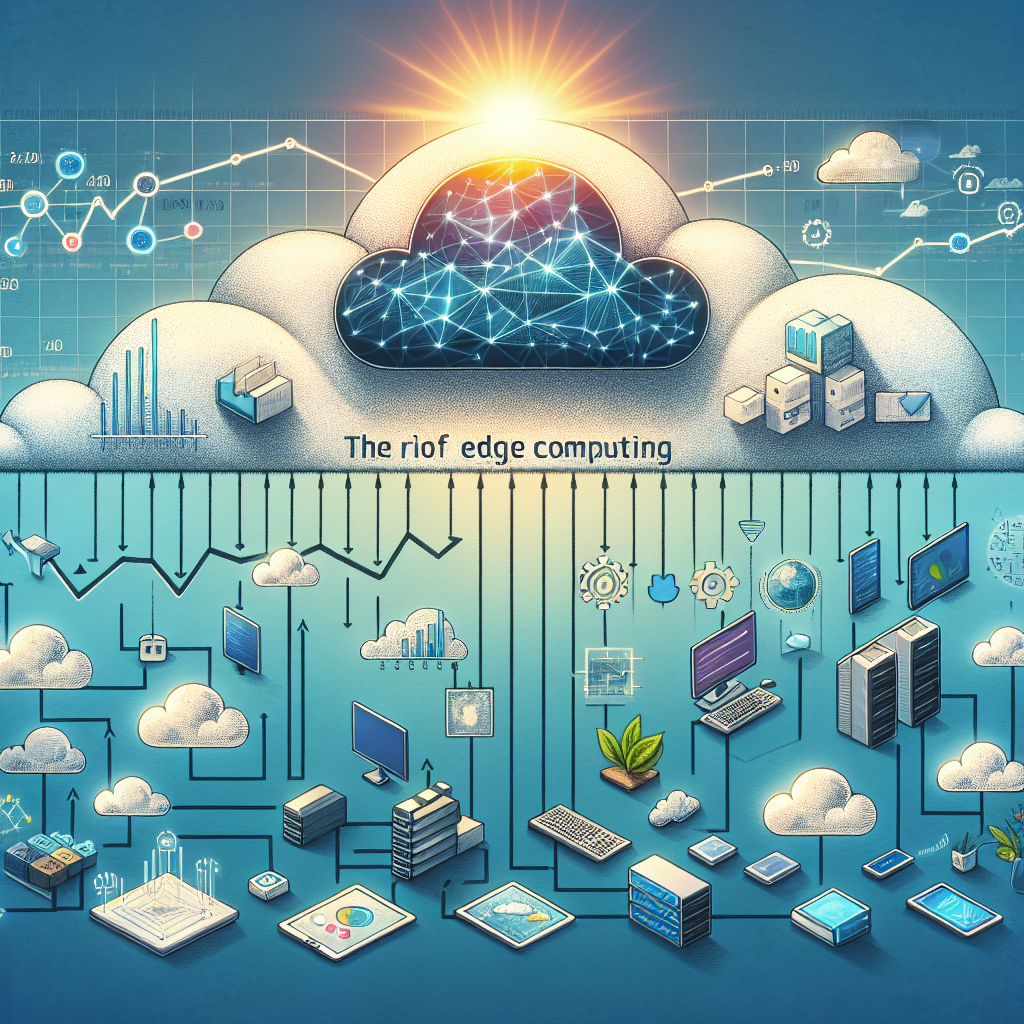
The Rise of Edge Computing: How It’s Redefining Cloud Services
In recent years, the landscape of technology has undergone seismic shifts, and one of the most prominent developments is the rise of edge computing. As businesses increasingly seek to harness the potential of the Internet of Things (IoT), the need for efficient data processing has surged. Edge computing emerges as a game-changing solution, redefining the way cloud services operate.
Understanding Edge Computing
At its core, edge computing involves processing data closer to the source of its generation, rather than relying solely on centralised data centres. This decentralised approach allows for quicker data processing, reduced latency, and improved bandwidth efficiency. By placing computational resources near the ‘edge’ of the network, organisations can respond to real-time demands and streamline operations significantly.
The Convergence of IoT and Edge Computing
With the proliferation of IoT devices—ranging from smart home appliances to industrial machines—massive amounts of data are generated every second. Traditional cloud services face limitations in terms of speed and bandwidth, creating potential bottlenecks in data transfer and processing. Edge computing addresses these challenges by allowing devices to process data locally, sending only relevant information to the cloud. This not only alleviates congestion but also enhances the speed at which data-driven decisions can be made.
Latency Matters
One of the primary advantages of edge computing is its ability to reduce latency. In scenarios where milliseconds count—such as autonomous vehicles, industrial automation, or healthcare—delays inherent in traditional cloud computing can lead to significant risks and inefficiencies. By processing data at the edge, organisations can ensure prompt responses and maintain a competitive edge in their respective markets.
Enhanced Security and Privacy
Another critical consideration is security. With data breaches and cyber threats on the rise, distributing computing resources can enhance security measures. By processing data locally, sensitive information can remain on-site rather than being transmitted over the internet, reducing vulnerability to external attacks. Additionally, regulatory compliance, especially in industries such as healthcare and finance, can be more easily managed with local data handling.
The Cloud Integration
Despite its advantages, edge computing does not aim to replace cloud services; rather, it offers a supplementary model. Businesses can benefit from a hybrid approach, where edge computing handles time-sensitive tasks and the cloud serves for broader analytical needs. This synergy enables organisations to leverage large-scale data storage and analytics while utilising edge capabilities for immediate processing and responsiveness.
The Expanding Market
The edge computing market is witnessing rapid growth. According to various forecasts, the sector could see exponential expansion in the coming years, driven by industries such as manufacturing, healthcare, transportation, and smart cities. As organisations increasingly adopt technologies like 5G, which allow for near-instantaneous data transfer, the appetite for edge-computing solutions will intensify.
Challenges Ahead
However, as with any transformative technology, edge computing is not without its challenges. Implementing edge solutions requires a significant infrastructure overhaul, which can be costly and complex. Furthermore, managing a network of distributed devices introduces new complexities in terms of maintenance, updates, and data management.
Conclusion
As we navigate an increasingly digital world, edge computing is poised to redefine cloud services and the broader technological landscape. By decentralising data processing, businesses can enhance efficiency, reduce latency, and bolster security. While challenges remain, the benefits of edge computing are clear, making it an essential consideration for organisations aiming to thrive in an era defined by cognitive connectivity and swift responsiveness. The future of cloud services is not merely in the cloud; it’s at the edge.
Share this content:



Post Comment